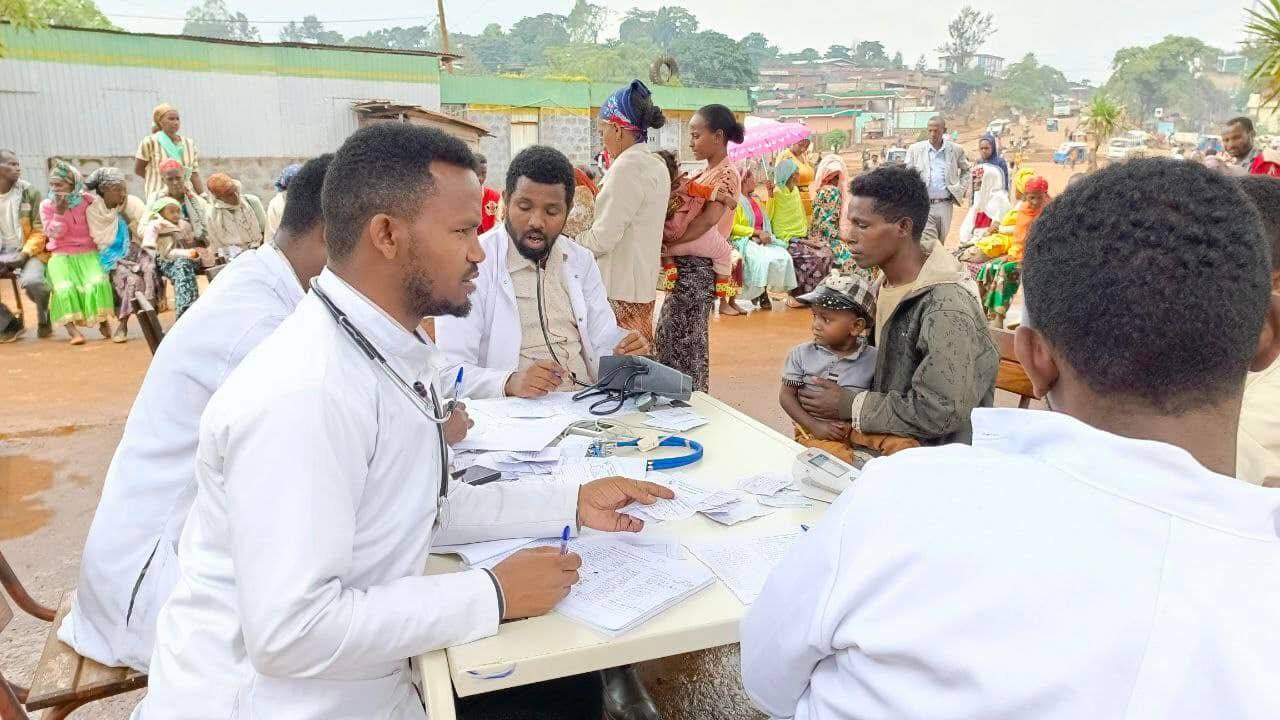
History of the DepartmentEstablishment (2010 E.C.)The department’s specialized focus on child health developed from the establishment of a dedicated unit in 2010 E.C. under the Institute of Health Sciences. Initially, the unit aimed to address the significant shortage of child and newborn health professionals by providing specialized training programs to help close regional workforce gaps. Transition to Specialized Medical CareAs Wollega University expanded its School of Medicine, the unit developed into a full academic and clinical department. Launch of the Residency ProgramTo help address the shortage of senior medical specialists in Western Ethiopia, the department launched a postgraduate medical residency program in Pediatrics and Child Health. Vision and MissionVisionTo become a leading, community-oriented center of excellence in pediatric education, clinical care, and child health research in East Africa, while contributing actively to the reduction of child and neonatal mortality. MissionTo train competent, ethical, and innovative pediatricians and child health professionals; provide high-quality, evidence-based preventive, curative, and rehabilitative services; and lead community-based research that addresses local and national child health challenges. Human Resources and Existing Health ServicesThe department operates through a multidisciplinary team of clinical and academic staff, including: · Pediatric specialists and senior staff: Consultant pediatricians and newly graduated specialists who oversee specialized patient care, supervise student clinical rotations, and support resident training. · Subspecialty and specialized units: Emerging specialized services include the Pediatric Hematology and Oncology Unit, which works with national and international networks to strengthen cancer care. · Medical residents: Pediatric resident physicians provide round-the-clock care in the emergency and inpatient departments. Major Clinical ServicesThe department provides a broad range of services for newborns, infants, and children: · Pediatric Outpatient Department (OPD): General consultations, management of childhood illnesses, and routine health assessments. · Pediatric Emergency and Triage: 24-hour emergency assessment, triage, and stabilization of children with life-threatening conditions. · Neonatal Intensive Care Unit (NICU): Specialized care for premature, low-birth-weight, and critically ill newborns. · Pediatric Hematology and Oncology Unit: Specialized assessment, monitoring, and treatment of children with cancers and blood disorders. · Nutritional Stabilization and Rehabilitation: Inpatient management of severe acute malnutrition in infants and children. · Pediatric Follow-up Clinics: Ongoing monitoring and management of chronic conditions, recovery, and long-term health needs. |
Academic Programs and AchievementsThe Department of Pediatrics and Child Health at the Wollega University Institute of Health Sciences (WUIHS) has made progress in undergraduate medical education, postgraduate training, and specialized medical residency programs. Undergraduate Medical EducationThe department plays an important role in the clinical education of undergraduate medical students. It provides bedside teaching, classroom lectures, clinical skills development, and supervision of pediatric ward rotations. Postgraduate Medical ResidencyThe department established a medical specialty residency program to train general practitioners to become specialists in Pediatrics and Child Health. First Specialist Graduation (2025)In 2025, the department reached a major milestone by graduating its first group of Pediatrics and Child Health specialist doctors. According to the information provided, the program has graduated six specialists and currently has ten residents in training. Medical Equipment and Diagnostic CapacityTo support pediatric diagnosis and critical care, the university hospital uses advanced imaging services and essential ward-level life-support equipment. Advanced Imaging: MRI and CTWollega University Comprehensive Specialized Teaching Hospital has acquired a Magnetic Resonance Imaging (MRI) machine. This service can support advanced neuro-oncology, brain, and musculoskeletal imaging for pediatric patients locally, potentially reducing the need for families to travel approximately 330 km to Addis Ababa for certain investigations. CT imaging is also included among the hospital’s advanced imaging capabilities. Critical Care EquipmentThe NICU and Pediatric Emergency Unit use essential equipment, including infant incubators to maintain thermal stability in premature newborns; phototherapy machines to treat neonatal jaundice; infusion pumps for accurate pediatric medication delivery; and oxygen concentrators and CPAP machines to support infants with respiratory distress. Need for a Dedicated Pediatric Intensive Care Unit (PICU)The Department of Pediatrics and Child Health is seeking to establish a dedicated Pediatric Intensive Care Unit (PICU) to strengthen the management of critically ill children. Establishing this unit requires essential life-support equipment, including mechanical ventilators, as well as other critical-care medical devices and supplies. ConclusionThe Department of Pediatrics and Child Health at Wollega University plays an important role in child health service delivery, medical education, specialist training, and research in Western Oromia. Continued investment in human resources, diagnostic capacity, and critical-care equipment, particularly the establishment of a dedicated PICU, would further strengthen the department’s ability to provide comprehensive care for newborns and children.
|

About Us




Contact Us
-
Address: Wollega Nekemte, Ethiopia
-
Phone: +251 576 61 79 81
-
Fax: +251 576 61 79 80
-
P.O.Box: 395
-
Email: info@wuihs.edu.et
-
Office Hours: Monday to Friday: 8:00 AM - 5:00 PM