|
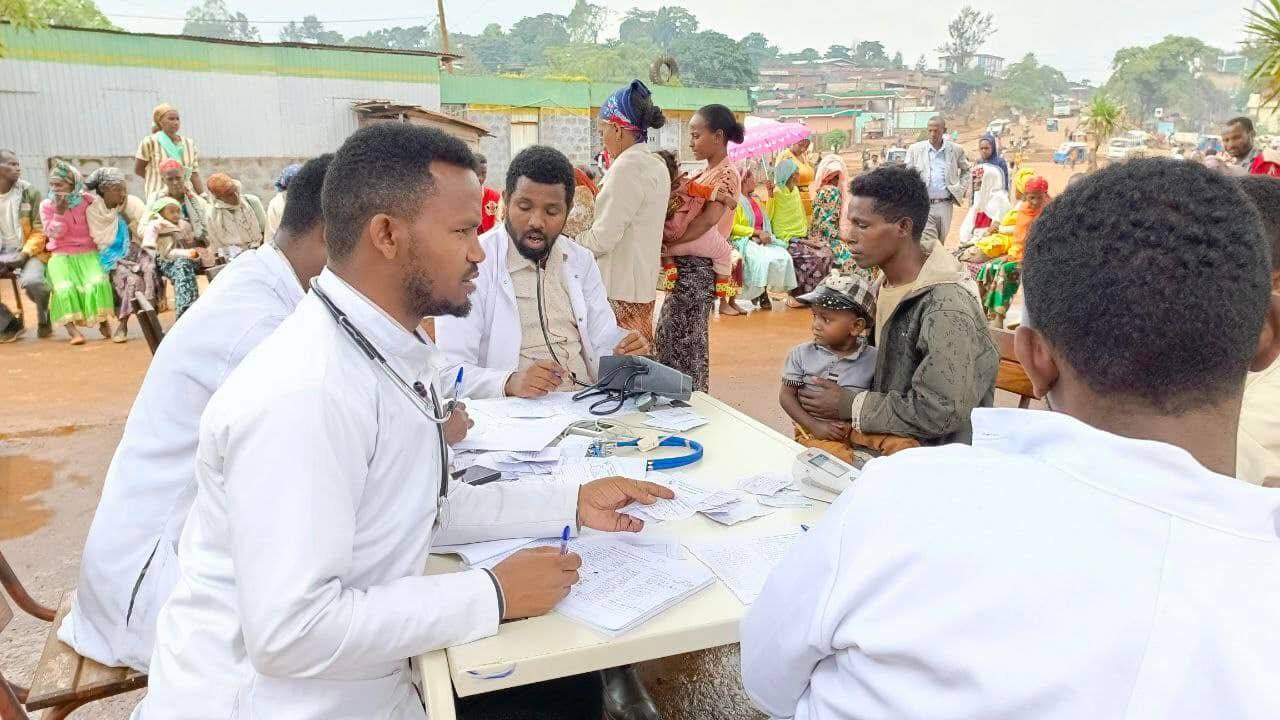
The Dentistry service at Wollega University was established in 2010 E.C. by two dental general practitioners, integrating both clinical care and academic training. In 2016 E.C., the service expanded to include Oral and Maxillofacial Surgery (OMFS), initially launched by a single maxillofacial surgeon. Today, the department has grown to feature two oral and maxillofacial surgeons. Consequently, Wollega University Comprehensive Specialized Hospital delivers robust clinical and academic services powered by a dedicated team of one dental general practitioner and two oral and maxillofacial surgeons Vission the department-To be one of Dental teaching center by accepting both under graduate and postgraduate students which prepare compassionate ,skilled and ethical dental professionals. Mission of the department-To provide high-quality, evidence-based dental and maxillofacial education and patient care. Human resource under the department 1.two maxillofacial surgeon 2.one dental general practitioner 3.six nurses The major services under the department and their capacity Patient education Simple and complex tooth extraction Treatment of maxillofacial trauma Treatment of maxillofacial benign odontogenic tumor Treatment of maxillofacial benign non odontogenic tumor Treatment of maxillofacial cyst Treatment of maxillofacial congenital abnormality Treatment of Orofacial cancer Treatment of temporomandibular joint disorder Treatment of maxillofacial pain Treatment of salivary gland disease Facial reconstructive surgery and etc… The achievement of the department so far in both academic and clinical services Clinically -the above mentioned services are providing at our hospital. Academically -class lecture and practical education is providing for medical students Currently we have two functional dental units which has no hand piece and one nonfunctional dental x-ray. Therefore for full clinical service we need functional dental x-ray ,dental chair, micro motor and bone cutting machine. Note-since our department is emerging department we need support and encourage from administrative to provide quality care for our patients. |
History of the DepartmentEstablishment (2010 E.C.)The department’s specialized focus on child health developed from the establishment of a dedicated unit in 2010 E.C. under the Institute of Health Sciences. Initially, the unit aimed to address the significant shortage of child and newborn health professionals by providing specialized training programs to help close regional workforce gaps. Transition to Specialized Medical CareAs Wollega University expanded its School of Medicine, the unit developed into a full academic and clinical department. Launch of the Residency ProgramTo help address the shortage of senior medical specialists in Western Ethiopia, the department launched a postgraduate medical residency program in Pediatrics and Child Health. Vision and MissionVisionTo become a leading, community-oriented center of excellence in pediatric education, clinical care, and child health research in East Africa, while contributing actively to the reduction of child and neonatal mortality. MissionTo train competent, ethical, and innovative pediatricians and child health professionals; provide high-quality, evidence-based preventive, curative, and rehabilitative services; and lead community-based research that addresses local and national child health challenges. Human Resources and Existing Health ServicesThe department operates through a multidisciplinary team of clinical and academic staff, including: · Pediatric specialists and senior staff: Consultant pediatricians and newly graduated specialists who oversee specialized patient care, supervise student clinical rotations, and support resident training. · Subspecialty and specialized units: Emerging specialized services include the Pediatric Hematology and Oncology Unit, which works with national and international networks to strengthen cancer care. · Medical residents: Pediatric resident physicians provide round-the-clock care in the emergency and inpatient departments. Major Clinical ServicesThe department provides a broad range of services for newborns, infants, and children: · Pediatric Outpatient Department (OPD): General consultations, management of childhood illnesses, and routine health assessments. · Pediatric Emergency and Triage: 24-hour emergency assessment, triage, and stabilization of children with life-threatening conditions. · Neonatal Intensive Care Unit (NICU): Specialized care for premature, low-birth-weight, and critically ill newborns. · Pediatric Hematology and Oncology Unit: Specialized assessment, monitoring, and treatment of children with cancers and blood disorders. · Nutritional Stabilization and Rehabilitation: Inpatient management of severe acute malnutrition in infants and children. · Pediatric Follow-up Clinics: Ongoing monitoring and management of chronic conditions, recovery, and long-term health needs. |
Academic Programs and AchievementsThe Department of Pediatrics and Child Health at the Wollega University Institute of Health Sciences (WUIHS) has made progress in undergraduate medical education, postgraduate training, and specialized medical residency programs. Undergraduate Medical EducationThe department plays an important role in the clinical education of undergraduate medical students. It provides bedside teaching, classroom lectures, clinical skills development, and supervision of pediatric ward rotations. Postgraduate Medical ResidencyThe department established a medical specialty residency program to train general practitioners to become specialists in Pediatrics and Child Health. First Specialist Graduation (2025)In 2025, the department reached a major milestone by graduating its first group of Pediatrics and Child Health specialist doctors. According to the information provided, the program has graduated six specialists and currently has ten residents in training. Medical Equipment and Diagnostic CapacityTo support pediatric diagnosis and critical care, the university hospital uses advanced imaging services and essential ward-level life-support equipment. Advanced Imaging: MRI and CTWollega University Comprehensive Specialized Teaching Hospital has acquired a Magnetic Resonance Imaging (MRI) machine. This service can support advanced neuro-oncology, brain, and musculoskeletal imaging for pediatric patients locally, potentially reducing the need for families to travel approximately 330 km to Addis Ababa for certain investigations. CT imaging is also included among the hospital’s advanced imaging capabilities. Critical Care EquipmentThe NICU and Pediatric Emergency Unit use essential equipment, including infant incubators to maintain thermal stability in premature newborns; phototherapy machines to treat neonatal jaundice; infusion pumps for accurate pediatric medication delivery; and oxygen concentrators and CPAP machines to support infants with respiratory distress. Need for a Dedicated Pediatric Intensive Care Unit (PICU)The Department of Pediatrics and Child Health is seeking to establish a dedicated Pediatric Intensive Care Unit (PICU) to strengthen the management of critically ill children. Establishing this unit requires essential life-support equipment, including mechanical ventilators, as well as other critical-care medical devices and supplies. ConclusionThe Department of Pediatrics and Child Health at Wollega University plays an important role in child health service delivery, medical education, specialist training, and research in Western Oromia. Continued investment in human resources, diagnostic capacity, and critical-care equipment, particularly the establishment of a dedicated PICU, would further strengthen the department’s ability to provide comprehensive care for newborns and children.
|
Historical BackgroundThe Department of Emergency Medicine and Critical Care (EMCC) is more than a clinical service. It is a team of professionals who come together every day to care for patients at some of the most critical moments of their lives, while also training the next generation of emergency and critical care professionals. The Department of Emergency Medicine and Critical Care (EMCC) was established in March 2009 E.C. as a dedicated academic and clinical department. At its establishment, the department began its work with six general practitioners and one specialist physician, providing emergency and critical care while also taking responsibility for teaching and professional development.
Since its establishment, the department has continued to grow in clinical service, postgraduate education, undergraduate teaching, professional development, research, quality improvement, and community service. Today, EMCC provides continuous, time-sensitive care for patients with acute illness and injury and supports the development of emergency and critical care capacity in Western Oromia. Our Service Volume and ImpactThe hospital has provided emergency and critical care services since it began operation in May 2009 E.C. The departmental reference records the following service volume for 2018 E.C.: · 9,935 patients received Emergency Department care during the year. · 391 patients were admitted for inpatient critical care. · 273 ICU patients (69.8%) recovered and were discharged home. · 118 ICU patients died, corresponding to an ICU mortality rate of approximately 30%. · The reference further reports that Emergency Department mortality had been reduced to below 1%. These figures demonstrate both the high volume of acute-care patients served and the department’s contribution to timely emergency and critical care in the region. Our Vision and MissionVisionWollega University, Emergency Departemnt aspires to be one of the top ten Best Emergency Department in Africa by 2042.Mission1. Provide timely, safe, compassionate, and evidence-based care to patients with acute illness and injury. 2. Recognize and stabilize critically ill patients early through effective triage, resuscitation, airway management, monitoring, and coordinated referral. 3. Train competent and compassionate emergency medicine and critical care professionals. 4. Create an environment where learning, teaching, research, and quality improvement are part of everyday clinical practice. 5. Strengthen emergency preparedness and extend emergency-care knowledge into the community and prehospital setting.
Our current staff profileEmergency and critical care is fundamentally a team effort. Our department brings together physicians, residents, general practitioners, nurses, and other professionals who work together to respond to emergencies, care for critically ill patients, and support learners.
We are committed to developing our people through practical training, mentorship, continuing professional development, simulation, research-methodology activities, and opportunities to strengthen clinical teaching and supervision. Emergency care· Emergency triage and prioritization. · Rapid assessment and stabilization of critically ill patients. · Adult medical and surgical emergencies. · Trauma and injury care. · Emergency airway management and respiratory support. · Cardiovascular emergencies, including cardiac arrest and acute coronary syndromes. · Neurological emergencies, including stroke, seizures, and altered consciousness. · Poisoning and toxicological emergencies. · Sepsis and infectious disease emergencies. · Emergency procedures, resuscitation, and coordination of referral and consultation. Critical care· Care of critically ill medical and surgical patients. · Management of severe sepsis and septic shock. · Management of respiratory failure and acute respiratory distress syndrome. · Mechanical ventilation and respiratory support. · Management of severe neurological emergencies and traumatic brain injury. · Management of severe poisoning and toxicological emergencies. · Hemodynamic monitoring and resuscitation. · Management of severe metabolic and electrolyte disturbances. · Post-resuscitation care and support of patients with multiple organ dysfunction. Education, Training and Community ServiceTeaching is an important part of who we are. We believe that every emergency can also be an opportunity to learn, improve practice, and build the skills of the next generation of healthcare professionals. · Emergency Medicine and Critical Care residency training. · Undergraduate medical student teaching. · Internship and clinical attachment supervision. · Bedside teaching and case-based discussion. · Journal clubs, seminars, academic conferences, and morbidity and mortality review. · Simulation and procedural skills training. · Clinical research and quality improvement activities. · Training-of-Trainers (TOT) on strengthening community-based emergency and prehospital care for healthcare professionals working outside the hospital. One of our important community-focused activities has been the provision of Training-of-Trainers (TOT) on strengthening community-based emergency and prehospital care for healthcare professionals outside the hospital. Through this initiative, the department contributes not only to care within WUCSH, but also to strengthening the wider emergency-care system. The goal is to improve early recognition of emergencies, appropriate initial response, timely referral, and continuity of care before patients reach hospital. |
What We DoOur work begins when a patient arrives with an emergency. We aim to recognize danger sign early, start treatment without unnecessary delay, stabilize the patient, and coordinate the next step of care. Academic and Clinical Achievements1) Establishment and implementation of the EMCC residency training program. 2) Development of a postgraduate learning environment for emergency medicine and critical care. 3) Ongoing supervision and training of EMCC residents. 4) Regular academic teaching, case discussions, seminars, journal clubs, and clinical learning activities. 5) Simulation-based resuscitation and procedural skills development. 6) Training-of-Trainers (TOT) on community-based emergency and prehospital care for healthcare professionals outside the hospital. 7) Provision of continuous emergency and critical care for patients with acute and life-threatening conditions. 8) Participation in quality improvement and patient-safety activities. 9) Promotion of research and academic development. Quality and Patient SafetyWe believe that quality improvement is not a one-time project; it is a way of working. The department uses practical review, audit, feedback, and teamwork to identify problems and improve care. · Triage quality and early recognition of critically ill patients. · Resuscitation and crash-cart readiness. · Airway management and procedural competence. · Critical care monitoring and documentation. · Medication safety. · Referral and consultation communication. · Clinical audits of high-risk or high-volume conditions. · CAUTI prevention, sepsis pathway improvement, infection prevention, and documentation quality. Equipment and Infrastructure: Where Support Can Make a DifferenceEmergency medicine is highly dependent on functional equipment. A skilled team can save lives, but the team also needs the right tools at the right time. The department therefore welcomes partners who can help strengthen essential equipment and infrastructure.
Key Challenges and Partnership Priorities· Limited availability of functional mechanical ventilators in the Emergency Department and ICU. · Nonfunctional or insufficient patient monitoring equipment. · Need of emergency medication timely · Need for a functional Emergency Department isolation area. · Need to improve ICU isolation capacity and functionality. · Need for Emergency Department renovation and service expansion. · Need for additional emergency and critical care specialists and trained nurses. · Need for stronger simulation and procedural training capacity. · Need for improved academic and working space for residents and staff. Why Partner With Us?Every day, patients arrive at our Emergency Department at moments when time matters most. Our responsibility is to respond quickly, treat patients safely, support families, and give critically ill patients the best possible chance of recovery. At the same time, we are building a department that does more than provide bedside care. We train future specialists, support other healthcare professionals, take emergency-care knowledge into the community, participate in research, and continuously look for practical ways to improve the quality of care. A partnership with the EMCC Department is therefore an opportunity to make a direct contribution to patient care while also helping build sustainable emergency and critical care capacity in Western Oromia. · Improve access to life-saving emergency and critical care. · Strengthen the capacity of a teaching hospital serving the surrounding population. · Support the education and training of future EMCC specialists. · Strengthen emergency and prehospital care beyond the hospital. · Support research, innovation, quality improvement, and evidence-based practice. · Build sustainable local capacity. Our FutureOur ambition is simple but important: to build an emergency and critical care service that our patients can depend on, that our learners are proud to train in, and that our partners can confidently support. We will continue to strengthen clinical services, postgraduate education, research, quality improvement, staff development, emergency preparedness, and community-based emergency care. With committed teamwork and the support of our university, hospital leadership, government, and partners, we believe the department can make an even greater contribution to the health of the people of Western Oromia and beyond. Together, we can strengthen emergency care, build local capacity, and save more lives. Contact and Partnership InformationDepartment of Emergency Medicine and Critical Care (EMCC) Telephone:251921546965
|
Continuing Professional Development [CPD]
Welcome to the Continuing Professional Development (CPD) Center of Wollega University Institute of Health Sciences. We are committed to advancing the knowledge, skills, and professional competencies of health professionals through high-quality, evidence-based learning opportunities.
About CPD
Continuing Professional Development (CPD) is ongoing process of learning activities through which health professionals maintain and develop throughout their career to ensure that they retain their capacity to practice safely, effectively and legally within their scope of practice. CPD denotes to the period of education and training of health professionals commencing after completion of basic or postgraduate health professional training. It is a broad concept referring to the continuing development of the multi-faceted competencies inherent in health services covering wider domains of professionalism needed for high-quality professional performance.
The Continuing Professional Development (CPD) Office of Wollega University Institute of Health Sciences is dedicated to promoting lifelong learning and professional excellence among health professionals. The center designs, coordinates, and delivers high-quality CPD programs that enable healthcare providers to continuously update their knowledge, strengthen their skills, and enhance their professional competencies in response to evolving healthcare needs and emerging scientific evidence.
Through accredited training, workshops, seminars, and other learning opportunities, the CPD center supports health professionals in maintaining safe, ethical, and evidence-based practice. The center works closely with academic departments, healthcare institutions, professional associations, Ministry of Health, Regional Health Bureau and other stakeholders to ensure the relevance, quality, and impact of its programs. By fostering a culture of continuous learning, innovation, and excellence, the CPD center contributes to improving healthcare service delivery, advancing professional standards, and strengthening the health system at local, regional, and national levels.
Vision
To become a center of excellence in Continuing Professional Development that empowers health professionals with the competencies needed to deliver quality healthcare and improve health outcomes.
Mission
To provide accessible, innovative, accredited, and evidence-based Continuing Professional Development programs that promote lifelong learning, professional excellence, and improved healthcare service delivery.
Core Values
- Excellence
- Professionalism
- Integrity
- Innovation
- Accountability
- Collaboration
- Lifelong Learning
- Equity
Our Services
- Facilitating trainings [Category I and II]
- Accrediting CPD courses
- Accrediting CPD Centers
- Developing CPD Courses
- Advocating CPD activities
Partners
We collaborate with:
- Regional Health Bureaus
- Ministry of Health
- Professional Associations
- Hospitals
- Sister CPD Centers
- Universities
- National and international partners
Contact Us
Email:
Phone number: +251917674952
|
Mulugeta Asefa Mate Phone: +251921219820 Position: WUIHS ICT Director |
Girma Estifanos Gobu ICT Infrastructure and Cyber Security Team Leader MSc. Degree in Computer Science Phone: +251911018294
|
Daniel Denu Sefu. Computer Maintenance expert. . Email: Phone:0910979647 |
|
Desalegn jibat beyene Cyber security |
Desistu Hirko Gonfa. Network Administrator. Phone: 0954435025. Email: desistuhi@wollegauniversity. |
Name : Gemechis Emiru Ayana Inst Email :gemechisem@wollega university.edu.et Phone: 0917838771 System Administrator. |
Dagim Samuel Temesgen (B.Pharm, DVM), Lecturer of Pharmacology
Admission requirements will be as per the University Senate Legislation
The University shall admit for undergraduate studies:
- Students who have completed Ethiopian high school education and satisfy its entrance qualification assessments.
- Applicants with foreign high school education of equivalent level to the Ethiopian high school education, as determined by the Ministry of Science and Higher Education, and who satisfy entrance requirements
- Considering the extensive practical attachments of the program, students with major disabilities (vision, mobility and hearing-related problems or those who cannot effectively use both hands) shall not be admitted
- Requests for transfer from other departments/disciplines shall be handled based on the relevant university regulation/senate legislation
Special Admission
Special admissions may be granted to attract potentially resourceful candidates such as mature students. Such special admissions shall be decided based on relevant university specific legislations and guidelines in line with the National direction.
Vision
To be a center of excellence in pharmaceutical education, research, and patient-centered care, recognized globally for advancing health through innovation, ethical practice, and service to humanity
Mission
The Department of Pharmacy is committed to:
- Educating and empowering competent, compassionate, and innovative pharmacists and pharmaceutical scientists.
- Advancing pharmaceutical sciences through impactful research and discovery.
- Delivering exemplary patient-centered pharmacy services in collaboration with healthcare teams and the community.
- Promoting safe, rational, and equitable use of medications to improve health outcomes and quality of life.
A. Academic Objectives (Education & Research)
Educational Objectives
- Curriculum Excellence: Design and regularly update an integrated, competency-based curriculum that meets national and international accreditation standards
- Knowledge & Skills: Produce graduates who possess deep knowledge of pharmaceutical sciences (pharmacology, pharmaceutics, clinical pharmacy, pharmacotherapy) and essential skills in communication, critical thinking, and problem-solving.
- Clinical Readiness: Ensure students can perform medication therapy management (MTM), patient counseling, medication safety reviews, and interprofessional collaboration upon graduation.
- Ethical & Legal Foundation: Instill strong ethical principles, legal knowledge, and professionalism in all aspects of pharmacy practice.
- Lifelong Learning: Foster habits of self-directed learning and professional development to adapt to evolving healthcare needs.
Research Objectives
- Innovative Discovery: Encourage faculty and student research in drug development, formulation, pharmacokinetics, pharmacogenomics, and clinical trials.
- Evidence-Based Practice: Generate and translate research findings into evidence-based guidelines for pharmacy practice and patient care.
- Grant & Publication Output: Increase extramural funding, peer-reviewed publications, and presentations at regional/international conferences.
- Collaboration: Establish interdisciplinary research collaborations with medical, nursing, public health, and basic science departments.
- Student Research Integration: Mandate or strongly promote research projects or capstone experiences for undergraduate and postgraduate students.
B. Service Objectives (Patient Care & Community Outreach)
Clinical & Patient Care Service Objectives
- Medication Safety: Implement systematic medication reconciliation, error reporting, and adverse drug reaction monitoring in affiliated hospitals or clinics.
- Patient Counseling: Provide comprehensive counseling to every patient on drug indication, dosage, administration, side effects, storage, and adherence.
- Therapeutic Monitoring: Offer pharmacokinetic consultation, dose adjustment, and monitoring for narrow-therapeutic-index drugs (e.g., warfarin, aminoglycosides).
- Chronic Disease Management: Run pharmacist-led clinics (e.g., diabetes, hypertension, asthma, anticoagulation) to optimize therapy and reduce hospital readmissions.
- Drug Information Service: Operate a drug information center to answer queries from healthcare professionals and the public, promoting rational medicine use.
Community & Public Health Service Objectives
- Health Screening & Immunization: Organize regular health camps (blood pressure, blood glucose, cholesterol) and, where legally permitted, provide pharmacist-administered immunizations.
- Medication Disposal & Stewardship: Lead safe medication disposal programs and antimicrobial stewardship initiatives in community and hospital settings.
- Public Education: Conduct outreach programs on topics like antibiotic resistance, smoking cessation, over-the-counter drug safety, and medication adherence.
- Telepharmacy Services: Extend pharmaceutical care to rural or underserved populations through digital platforms.
- Disaster & Emergency Preparedness: Develop and participate in plans for medication supply chain management during public health emergencies.
C. Overarching / Institutional-Level Objectives
- Quality Improvement: Continuously monitor and improve key performance indicators (KPIs) — e.g., student pass rates (≥80%), research output (≥2 papers/faculty/year), patient satisfaction with pharmacy services (≥85%).
- Accreditation & Compliance: Maintain full compliance with regulatory bodies (Interprofessional Integration: Embed pharmacy students and faculty into medical rounds, primary care teams, and community health projects.
- Alumni & Stakeholder Engagement: Forge strong networks with alumni, employers, hospitals, and pharmaceutical industry partners to inform curriculum and placement.